Showing posts with label Siskiyou. Show all posts

Saturday, December 5, 2015

The Chinese in Yreka


Yreka's Chinatown, circa 1899.


The first Chinese to arrive in Yreka came in 1853.  They came to the west because in their own Kwang Tung Province in Southern China (today known as Guangdong, which essentially surrounds modern day Hong Kong) civil strife and crop failure caused many to immigrate to California with one of six major Chinese Companies, essentially as indentured servants. 

            The New York Daily Times on June 28, 1853 (page 3) likely reprinted an article from one of our more local papers, stated:  “It was a shocking arrival this day in June when 35 Chinamen arrived here in Yreka.  They are the first of this kind who have made their appearance here, and their arrival created quite an excitement in town.  The Chinamen promptly tendered the amount of the foreign miner’s tax, but no officer was authorized to receive it.  There was great discussion of what to do among the men present, and after quite some discussion they were permitted to remain.”  Between 1860 and 1870 the Chinese population doubled in Siskiyou County to 1,176 persons ~ but was likely higher as women weren’t always counted in the census at that time.

            The Chinese in Yreka did not have an easy life.  At first attitudes towards them were tolerant, but once it became apparent that they were not going to purchase many American made goods and better the local shopkeepers pocketbooks as well as embracing their different customs and lifestyles, attitudes against them hardened.  The majority of the Chinese worked in mining, while the older or less physically able may have worked as cooks, washers, or as Chinese shopkeepers selling goods largely from China.

            There were 3 different “Chinatown’s” in Yreka over the years.  The first area settled by the Chinese was on the south side of the 500 Block of West Miner Street, but many of them moved from that location by 1868.  Many merchants discouraged them from being on Miner Street as they were reported to live in “shacks” that caught fire easily, and had poor sanitary conditions, especially the laundry houses.
The Joss House in Yreka's Chinatown 

            The second location of Yreka’s “Chinatown” and likely the longest residency was along Main Street which was on both sides of the street from Center to Miner about half way up the block.  Their stores would have stopped just short of the location where the Rex Club is today at 111 South Main Street, Yreka.  In 1871 a great fire devastated Yreka and a great deal of the business section of town burned, including the Chinese section.  They went to work and rebuilt right away, this time many buildings were rebuilt with brick.  Misfortune came to the Chinese again when in 1886 the Main Street Chinatown was once again consumed by fire.    A “citizens meeting” followed immediately on the heels of this fire and a new Chinatown was created across Yreka Creek on what was then the far east end of Center Street. 

            In less than 5 years at the third Chinatown location, tragedy struck again.  The hard winter of 1889-90 followed by warm rains caused massive flooding in Yreka Creek and throughout the county.  The vast majority of Chinatown was literally washed downstream.   By 1900 there were only 4 or 5 Chinese stores that operated within a total of 14 buildings occupied by the Chinese settlers.  Today there is nothing left of the last “Chinatown” in Yreka, when Interstate 5 was created it essentially was built right over the top of the remains of Chinatown at the central exit.  While there were no buildings left by the time the freeway was constructed, some archaeological digs were performed in the area.


            There are many local stories and lore regarding the Chinese here in Yreka, for further information one can contact either Yreka Preservation or the Siskiyou County Historical Society.  Information for this article was found largely from the Meamber Research Files located at Yreka Preservation as well as some information from an article by the former Museum Director, Mike Hendryx as well as the 1990 edition of the Siskiyou Pioneer published by the Siskiyou County Historical Society.

Copyright:  Claudia East, 2015

Sunday, January 18, 2015

The King and White Building


231 Miner Street, Yreka, CA

The building that sits on the corner of Miner and Fourth Streets today was built while Yreka was in its early boom days. Records show that it was in use as early as 1854. The locally well known 1858 hand drawn map and layout of Yreka shows the King and White building, and by 1855 the Yreka Journal was printing notices and advertisements for the King and White building. They sold paint, oil, glass crockery, glassware, harnesses, spurs, bridles and a wide variety of merchandise. It was lauded as the “fireproof” brick building at the corner of Miner and Fourth Streets.

During the 1860's the address for this building was known to be 40 Miner Street. In 1871 during the “Great Conflagration” of July 4, this building was partially burned and obliterated a wood building that was built at the rear of the store along Fourth Street. The total loss of buildings and goods was valued at $3,000. Within two months time the owner was bringing rock and brick for an “addition” to the building to be built at the back section to replace the wooden section that had been burned.

In 1896 it was announced that the Bee Hive (a general store) would occupy this building, owned by R. H. DeWitt. Mr. DeWitt partially remodeled the building by putting in a new plate glass front. The Bee Hive was in this location only a few years, when in 1898 DeWitt and Peters built a new much larger building at the corner of Miner and Oregon Streets. The structure is still standing today, and is known as the Elks Lodge. In 1898 Churchill and Son purchased this building and did much more renovation to the building. In March of 1898 the Yreka Journal reported: “Mr. Churchill has overhauled the Old King Store recently vacated by the Bee Hive. The inside is about all torn out, and a new front wall to hold two large plate glass windows is being constructed. A new ceiling is being built on the interior.” This new store carried a variety of goods in addition to drugs. They advertised as being Druggists, Booksellers, Stationers, and offering Kodaks and complete photographic Supplies, Candy, Molasses, Maple Syrup and Wall Paper. The Churchills carried on their business at this location until 1916 when it was purchased by Frank Ackerman, the manager of the store for Mr. Churchill.                            

The Ackerman Drug Store operated here until 1932 when it was sold to Maguire and Greene who also operated a Drug Store here. The Maguire and Greene Drug Store operated until 1976 when the store was closed.

From about 1856 until the early 1930's there was another structure to the West. It actually made Fourth Street very narrow, jutting out into the street. This was the former Pashburg Building. Eventually the building was torn down and Fourth Street was widened to what we see today.


Source of information: From the files of Yreka Preservation contributed articles and information by Donald Carey, Harland McDonald, and Archie Noonan.

Friday, June 6, 2014

Greenhorn

Greenhorn Sawmill, photo courtesy Siskiyou County Museum


By Claudia East

The term “greenhorn” when used as a noun is defined by the dictionary as an untrained or inexperienced person, a naïve or gullible person; someone easily tricked or swindled, and also as a newly arrived immigrant or newcomer.  So, where does that fall in the category of Yreka History?  Locals know of our delightful Greenhorn Park and Greenhorn Creek, situated just south and to the west of the most heavily populated part of town.  There is quite a bit of local lore written about “greenhorn”, but most of the stories are similar in nature.  One of the early records of Greenhorn is from Well’s History of Siskiyou where he explains that the creek was called Race Creek in the early days because as soon as gold was discovered at Thompson’s Dry Diggings (Yreka) people started looking frantically everywhere along nearby creeks, the one we know today was called Race Creek in the early days because folks “raced” to get there to search for gold.

            So, how did Greenhorn come to bear its name?  As the story goes that little, if anything, was found along Race Creek and was soon abandoned by the miners.  One day a new arrival, perhaps an Englishman, came to town and asked where he could find a good place to mine for gold as he was ready to find his fortune.  The miners, thought they would put “one over” on this “greenhorn” and sent him up Race Creek to dig fully believing he wouldn't find anything.  As he began to work the area along the creek the local miners continued to enjoy their joke on this newcomer.  To perpetuate the joke, they began to call it Greenhorn Creek.  The joke, however, turned out to be on the miners, as he mined over $7,000 in gold in only a few days!  As soon as the word was out, the Greenhorn rush was on; miners quickly wanted to make their own claims along the five mile stretch of the creek.  During the years the area was mined, over $11 million in gold was mined from this area.  Greenhorn was one of the best producers of gold in the county from 1850 on.  The area was even dredged in later years until high bedrock was hit and the dredge could no longer be floated.
           
            While the creek was producing gold, however, like many other places throughout the county a small little town came into being and was even given a voting precinct of its own.  At one time (circa 1870 – 1881) it had a little general store, a tannery, a glove factory and small furniture factory, and sawmill.  There was also a small schoolhouse established in 1859.  Today all vestiges of the former town are gone except the Greenhorn Schoolhouse located near the south entrance to Greenhorn Park; the original school building is long gone and the little red schoolhouse we see today was built sometime before 1935 but replaced the original building.   The location of the schoolhouse is not in the original position, reported to have been moved between 1947 and 1957; it was originally located near the confluence of Greenhorn and Yreka Creek.  This may have been somewhere near where the interstate crosses today.


            There is a lot of history in this small area near Yreka, there was even an event called the Greenhorn War that initiated over water rights for mining.  Today, the Greenhorn Creek as it was seen 150 years ago looks very different today, instead of miners and a sawmill we have a beautiful park, lovely trails, and a lake that is home to many birds and animals.  

Copyright:  Claudia East

Tuesday, April 16, 2013

Robbers Rock


Robber’s Rock
and the Last Stage Robbery in California

By Claudia East


            It was a warm afternoon on July 5, 1908, the three gentlemen passengers and one lady passenger jostled along in the Fort Jones bound stage.  The team of horses and the passengers had nearly made it to the top of the pass from Yreka.  Just as they were coming up on a sharp turn an armed masked man stopped the stage.  The driver, Fred ‘Cougar’ Vetterline thought about continuing on their way until the gunman cocked his gun and he saw the head and shoulders of another from behind the big rock with a six shooter pointed at his head.  According to old news accounts the bandit demanded the Wells, Fargo & Company strong box be thrown down. 

            After trying for a time the robber couldn't get the strong box open, so he asked the driver, Vetterline, if he could borrow his axe.  Apparently his response was, “sure, I’m not using it.”  The robber chopped the metal bound box open and removed an undisclosed amount of money and returned the damaged safe to the stage with all other documents and mail intact.  The robber did also lessen the load for the passengers and driver by taking their money and watches.  The driver, Vetterline, had $1.50 and after the robber took his money he told the thief he would need money to buy a drink in Ft. Jones once they got there, so the robber gave him back fifty cents.

            In the account of the robbery by the Yreka Journal one of the passengers gave an interview and explained “The bandit was a jolly fellow.  He joshed and talked with the passengers.  When he broke the driver’s axe he told him he was sorry and he would buy him a new one.”  The Journal went on to report that the robber was “a slender man of medium height and had a handkerchief over his face. The other robber was so concealed that no description of him could be given.”

            No one was ever arrested for this last stage hold up and there were no clues as to the identity of the robbers.  Following the incident there were all sorts of theories and ideas, even Black Bart was named at one point, even though his last robbery was 30 years earlier!  In the 1965 edition of The Siskiyou Pioneer one can find stories about this robbery and the theories that were presented by local historian and attorney at law, Fred Burton.

            Robber’s Rock can be located a short distance before the summit on Highway 3 between Yreka and Ft. Jones, just down on the Yreka side and towards the southern side of the road.  It isn't easily identifiable until one pulls off the shoulder of the road and looks.  The Humbug Chapter of E. Clampus Vitus has placed a plaque on the rock with a brief account of the robberies that were recorded at this spot. 

            This last robbery was not the cause of the namesake of this particular rock, there were others before, at least four documented robberies, but local lore claim there were many unrecorded hold ups there.   Today it doesn't look like much of a hiding place, but if one looks at the old road that goes down the hill from the rock and imagine what it took for a team of horses to pull that grade, and understand that road builders have filled in a lot of the grade and built road material around the foot of the rock, in addition to blasting off the top of the large boulder.

            Taking a drive up to Robber’s Rock is a pleasant drive and a visit to the rock and surrounding area can almost take one back to 1908.

*This article appeared in Jefferson Backroads, December 2012.  Copyright, Claudia East.

Saturday, April 6, 2013

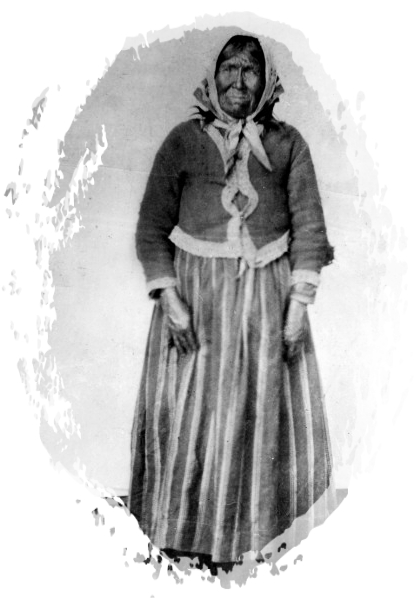
Indian Peggy ~ Local Heroine


Indian Peggy

By Claudia East

            Indian Peggy was a very colorful heroine of Yreka.  Many stories and facts have been mixed over the years so that the actual authenticity of what actually happened has been clouded.  So with the possibility of errors this story is shared.  However, with that said we say with confidence Indian Peggy saved Yreka and the former miner’s town of Humbug City from a surprise Indian attack in the early 1850s.

            When the miners came looking for gold that was their feverish purpose, and natives were oftentimes looked upon as barriers to overcome in the quest for riches.  There were often bad feelings on both sides, the miners intruded on the Indian lands and had little respect for tribal hunting grounds, and the Indians were often ill treated.  As the result the local Indian tribes were often fearful and hostile towards the “white” miners who had little regard for the environment and took and used whatever they needed to find the precious gold.  As a result of these factors groups of natives decided to try and rid their homeland of the menace and their practices and formed a large war party.  The plan was a surprise attack on Humbug City and then on to Yreka.

            Indian Peggy was an unusual and exceptional woman; she had friends on both her native side, and with the whites.  She could see that this potential raid on the miners could turn into a bloody war and both sides would lose dearly.  She would lose family and friends she had known for her whole life, as well as her white friends she had recently come to know.  It was 1852 and only a year after gold was discovered.  Indian Peggy took it upon herself to save everyone from this potential massacre.  She lived nearby on a Rancheria and walked several miles to Humbug City and warned the people there and convinced them to retreat to Yreka.  As the miners got to Yreka the news of the impending raid spread very quickly.  When the Indians came upon Humbug City and found it deserted they knew they had lost the element of surprise, they pulled back and withdrew from their plans of attack knowing they would be the targets instead.

            Indian Peggy had renewed status with the miners and the settlers because of her warning of the impending attack.  There are stories told for years that after her warning Indian Peggy would come to town and help herself to things she needed, or would knock on a door and ask for things like blankets, warm clothing or food ~ apparently she was seldom refused.  Indian Peggy lived to be at least 100 and died in 1902.  Following her death, it is said that the high school at Yreka even closed so students could attend her funeral.  It has been reported that Tyee Jim, Chief of the Shasta Nation, gave the eulogy all in his native language.  It is said that there were a good number of people, both Indian and white in attendance on that day.

            In 1951 the Siskiyou County Historical Society placed a marker at her grave.  It reads:  “Indian Peggy born about 1800.  Died October 26, 1902.  Beloved member of the Shasta Tribe.  A friend of Indians and Whites.  Saved Yreka by warning them of an Indian Attack.”  Her marker sits near the current Siskiyou Golden Fairgrounds.

*Note:  There are several stories and accounts of Indian Peggy in local publications. These are but a few:  The Siskiyou Pioneer publications from the Siskiyou County Historical Society have information about Indian Peggy in the 1971, 1951, and 2001 issues.  There is also a story about Indian Peggy at the California State Parks website.  The Siskiyou Daily News ran a story on Indian Peggy between 1998 – 2000 by Nancy Drennon.