Showing posts with label Gold. Show all posts

Tuesday, July 7, 2015

The Baldwin Block, Part 1


The article below is copyrighted by Yreka (Historic) Preservation and reprinted by permission.  It originally appeared in the February/March 1984 edition of Yreka Echoes Newsletter.  Please note some of the businesses are no longer at the locations mentioned.


An eventful year in our historic past was 1871, when a fire ravaged nearly one-third of the town of Yreka.  The fire started in a Chinese wash house west of Second Street (Broadway), pinpointed by the old-timers as approximately where the Yreka Flower Shop is now, 208 West Miner Street, and in one hour’s time left the town in ruins due to shifting winds carrying the fire from street to street.  It was ten years before rebuilding began on what became known as the Baldwin Block, where Ohlund’s Office Supply and the Miner Street Meat Market now resides.  

            In 1881 contractors J. W. Riddle and Al Smith began construction on the building for Mrs. W. I. Nichols, whose father was Rev. J. T. Baldwin, a Presbyterian minister and graduate of Princeton University in the class of 1823.  Her husband was a local attorney.

            The building was a large 100 by 80-foot brick structure, with a space in back designed for offices or sleeping rooms.  Work progressed slowly, since they worked through the winter and mortar and plastered walls did not dry well due to freezing temperatures.  An outstanding feature of building in that era was the substantial board walks constructed in front of the building; and the basements were large and well drained by deep sewers running into Yreka Creek.

            The first business to open where Ohlund’s Office Supply is now located was a saloon.  On June 3, 1882 the Portuguese Billiard Saloon opened its doors for business, operated by Frank Roberts and A. S. Oliver.  They spared no effort or expense in making it one of the “handsomest” places of “public resort” in the country.  The bar, made by Mr. Oliver, was located on the east side of the saloon and a shooting gallery, at 25¢ for six shots, attracted local sportsmen on the west side.  A Virginia pool table was the center focal point.  Quoting from the Yreka Journal of June 3, 1882: “No boys under 18 permitted as a preventive of becoming a hoodlum resort.”

            The building was sold by Mrs. Nichols (Jennie T. Nichols) to N. B. Julien October 20, 1882 for the sum of $5,084.50, and in 1885 the saloon was known as the Roberts Saloon.  By 1892 the building was being used as a sample room for the Clarendon Hotel across the street.

            A new steel roof was put on the entire Baldwin Block in 1899 by Mr. Julien, the owner, who hired Iunker Brothers to cover the 9,000 square foot space.  New chimneys were made, and new skylights coated with iron sheeting.  The rear portion above the brick wall was covered with iron to make the block as near fireproof as possible.

            The Walker-Avery Drug Store was the next business in this location.  Extensive improvements were made before the proprietors occupied the store in May, 1900, which made the store “the most beautiful, modern building north of Sacramento.”  A new façade was erected with a plate glass front and two doors, and a beautifully refurbished interior.  Quoting the Yreka Journal of May 26, 1903, “C. W. Avery has a cozy and neat arbor or tent in the center of his drug store, where partees [sic] can enjoy refreshments during warm days in the way of ice cream, ice cream soda, and various kinds of temperance beverages.”

Look for Part 2 of this article in the next blog post...

Sunday, January 18, 2015

The King and White Building


231 Miner Street, Yreka, CA

The building that sits on the corner of Miner and Fourth Streets today was built while Yreka was in its early boom days. Records show that it was in use as early as 1854. The locally well known 1858 hand drawn map and layout of Yreka shows the King and White building, and by 1855 the Yreka Journal was printing notices and advertisements for the King and White building. They sold paint, oil, glass crockery, glassware, harnesses, spurs, bridles and a wide variety of merchandise. It was lauded as the “fireproof” brick building at the corner of Miner and Fourth Streets.

During the 1860's the address for this building was known to be 40 Miner Street. In 1871 during the “Great Conflagration” of July 4, this building was partially burned and obliterated a wood building that was built at the rear of the store along Fourth Street. The total loss of buildings and goods was valued at $3,000. Within two months time the owner was bringing rock and brick for an “addition” to the building to be built at the back section to replace the wooden section that had been burned.

In 1896 it was announced that the Bee Hive (a general store) would occupy this building, owned by R. H. DeWitt. Mr. DeWitt partially remodeled the building by putting in a new plate glass front. The Bee Hive was in this location only a few years, when in 1898 DeWitt and Peters built a new much larger building at the corner of Miner and Oregon Streets. The structure is still standing today, and is known as the Elks Lodge. In 1898 Churchill and Son purchased this building and did much more renovation to the building. In March of 1898 the Yreka Journal reported: “Mr. Churchill has overhauled the Old King Store recently vacated by the Bee Hive. The inside is about all torn out, and a new front wall to hold two large plate glass windows is being constructed. A new ceiling is being built on the interior.” This new store carried a variety of goods in addition to drugs. They advertised as being Druggists, Booksellers, Stationers, and offering Kodaks and complete photographic Supplies, Candy, Molasses, Maple Syrup and Wall Paper. The Churchills carried on their business at this location until 1916 when it was purchased by Frank Ackerman, the manager of the store for Mr. Churchill.                            

The Ackerman Drug Store operated here until 1932 when it was sold to Maguire and Greene who also operated a Drug Store here. The Maguire and Greene Drug Store operated until 1976 when the store was closed.

From about 1856 until the early 1930's there was another structure to the West. It actually made Fourth Street very narrow, jutting out into the street. This was the former Pashburg Building. Eventually the building was torn down and Fourth Street was widened to what we see today.


Source of information: From the files of Yreka Preservation contributed articles and information by Donald Carey, Harland McDonald, and Archie Noonan.

Sunday, May 18, 2014

Deadwood and Yreka


Yreka vs. Deadwood

   The Fight for the County Seat

 By Claudia East


              It had been a little over a year from the discovery of gold in 1851 on the flats that that Yreka had grown to over 2,000 inhabitants.  Siskiyou County was formed in March of 1852 from parts of Shasta and Klamath Counties and was named after the Siskiyou Mountain Range.  It wasn't long before a county seat needed to be determined for this new county of California.  At the time there were two towns vying for the title; that of Yreka and neighboring Deadwood which was second only to Yreka in population and was located over Greenhorn down towards the Ft. Jones area near McAdams Creek.   

            Deadwood was one of the most important business centers in the county; it was a mining town as well and had three stores, two hotels, a drug store, a butcher shop, three saloons, a bakery, two stables and a dairy.  The first bank to ever open in Siskiyou County was opened in Deadwood according to historical writings.  Many well known local pioneers had businesses in Deadwood and among them were A. B. Carlock, Daniel Ream and M. Rosenberg. 

            Early Yreka was also vibrant with stores, a stage office, brewery, hotels, meat market, hardware store, blacksmith, barbershop, saloons, a church and other places of business.  Unlike Deadwood, Yreka also had permanent residences while most of the miners in the Deadwood area lived in tents and shacks or at the boarding houses. 

            When it came time to choose a County Seat the competition between the two towns was fierce.  It was not readily predictable who would win as it was a large county and folks would have to travel many miles from one part of the county to the other to actually visit the County Seat and take care of government matters, many of them relating to property ownership, court matters and the like.  A story from a local newspaper following the county convention to elect a county seat reported the following:

            The people have spoken, and Yreka has been voted to hold the title of County Seat for the newly formed County of Siskiyou recently named by the California Legislature.  The campaigns were strong and neighboring Deadwood came very close behind Yreka, there are still rumbling accusations of underhanded dealings during the elections.  Apparently Etna had a lower voter turnout and some say it is because of the whisky party that was carried on the night before the election.  Plans will soon be underway for officers of the county and a place to hold official meetings.

            According to some historical information (whether speculated or accurate it is not entirely known…) that Etna being closer to Deadwood would vote in that direction along with others and the whiskey delivered to the voters in Etna was from Yreka.  Some reports tell of the deciding vote to be only one, and other reports simply say it was a very close election.

            In 1861 the majority of the town of Deadwood was burned to the ground in a fire.  Following that fire there were a few buildings remaining and a few residents, but it wasn't long before the town faded from existence.  Deadwood was vibrant for only 10 years, but adds a significant story to the history of our county.  Today the only thing that remains to mark the town site are a few very old fruit trees and one of the first historical monuments placed by the Siskiyou County Historical Society in 1948.  One can visit the site by traveling one of two ways.  Travel Highway 3 towards Ft. Jones and turn on McAdams Creek Road before entering the town limits of Ft. Jones.  Simply following this road will eventually take one to Forest Service Road 45N49 turn and travel a few car lengths to the monument.  The second route would be to simply travel up Greenhorn Road from Yreka and continue over the mountain and back down and look for Forest Service Road 45N49.  The monument is visible from the road if you know where to look, but the most identifiable marks will be the open flat area the town site was located and a few ancient fruit trees on the side of a hill.


            Note:  This author  is sad to report that this historic monument has been the recent target of vandals, the monument was restored a few years ago with the help of E Clampus Vitus, Humbug Chapter, along with the Siskiyou County Historical Society to repair earlier damage, but again it has been targeted by vandals shooting bullets at the bronze plaque.

Saturday, April 19, 2014

Lotta Crabtree


Lotta Crabtree
By Claudia East

            Around 1950, along Miner Street in Yreka, a sign was placed approximately near the curb where one today finds the plaque dedicating our National Historic District. The sign partially read:  “Arcade Billiard Saloon, here in the fifties Lotta Crabtree sang for the miners…”  the sign disappeared sometime more than 20 years ago but is fondly remembered by many Yreka residents.
           
During the early Gold Rush in California there was a talented and beautiful little girl with curly red hair that used to sing, dance, and play the banjo for the miners. The miners would cheerfully throw gold at her feet!  Lotta traveled with her mother to various mining areas throughout California and Nevada to entertain.  She became the equivalent of today’s “rock star” at an early age, and by 20 years old she was touring the nation with her own theatrical company.

            During the 1870s and 1880s she was the highest paid actress in America earning sums of up to $5,000 per week.  Her mother managed her affairs and invested Lotta’s earnings in real estate, race horses and bonds.  She also used some of the earnings to support local charities and build fountains.  The most famous of these fountains, “Lotta’s Fountain” still stands at the intersection of Kearny and Market Streets in San Francisco.  The fountain was an important meeting place following the 1906 earthquake for folks to find family and friends who survived the ordeal.  In fact, today, the fountain is the site of meetings on April 18 of each year that mark the anniversary of the earthquake.

           In 1945, local historian Bernice Meamber met and carefully noted a conversation she had with Charles Herzog, a long time Yrekan, about Lotta Crabtree and her time in Yreka.  It has been speculated through various accounts that Lotta arrived in Yreka sometime between 1853 and 1857, so she would have been between six and ten years old at the time.  The length of her stay here has also been disputed from three months to three years, but no matter how long she was here, she won the hearts and gold from the miners. 

            In the conversation with Charles Herzog he recalled to Bernice Meamber that it was in November of 1854 that Lotta and her mother came to Yreka.  When they arrived they were “destitute” and they stayed with his family.  Lotta sang and danced at the W. S. R. Taylor Saloon [aka Arcade Billiard Saloon] and entertained the miners.  He recounted that one night at Taylor’s Saloon she took in $10,000 in gold dust alone!   When all of this happened Charles Herzog was just a mere toddler, being born in Yreka in 1856.  However, Charles goes on to verify his story by recounting a chance meeting with Lotta years later in 1876.  Charles had just finished driving a band of cattle to San Francisco and was actually at Lotta’s Fountain getting a drink of water when a woman stopped and spoke to him.  In the conversation she asked him where he was from, and when he mentioned Yreka, the conversation blossomed from there.  She told him she remembered when she stayed with his family and that she used to carry him around as a little one.  She recounted the night she took in $10,000 and that when she left Yreka she gave her piano to the Catholic Church (when it was still up on the hill by the cemetery).


            Lotta reigned as a top earning star in America for 25 years and traveled the entire nation.  At the age of 43 she retired following a fall; she “went out on top”.  She lived until 1924, at age 76 and after her retirement did not perform much according to research except for a special event, her last performance, during the 1915 Panama Exposition in San Francisco during “Lotta Crabtree Day”.  Lotta felt her wealth had come from the people and thought it should be returned to them.  After her death in her estate was valued at about Four Million dollars in a charitable trust, and it was left to funds for hospitals, education, needy actors, homeless animals, and spreading cheer at Christmas.  The largest sums went to disabled veterans of World War I, and to ex-convicts in starting life anew after release from prison.  These funds are still in operation. 
Copyright:  Claudia East, 2013

Saturday, April 6, 2013

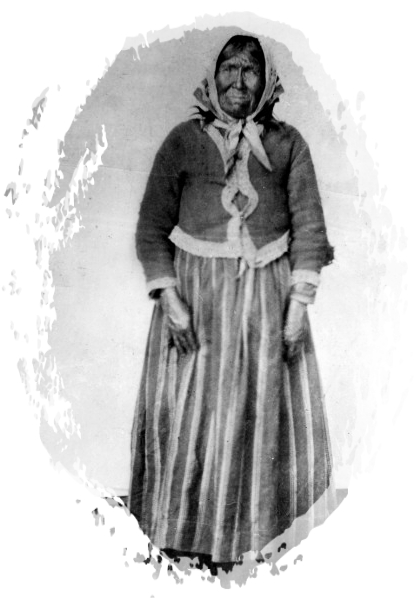
Indian Peggy ~ Local Heroine


Indian Peggy

By Claudia East

            Indian Peggy was a very colorful heroine of Yreka.  Many stories and facts have been mixed over the years so that the actual authenticity of what actually happened has been clouded.  So with the possibility of errors this story is shared.  However, with that said we say with confidence Indian Peggy saved Yreka and the former miner’s town of Humbug City from a surprise Indian attack in the early 1850s.

            When the miners came looking for gold that was their feverish purpose, and natives were oftentimes looked upon as barriers to overcome in the quest for riches.  There were often bad feelings on both sides, the miners intruded on the Indian lands and had little respect for tribal hunting grounds, and the Indians were often ill treated.  As the result the local Indian tribes were often fearful and hostile towards the “white” miners who had little regard for the environment and took and used whatever they needed to find the precious gold.  As a result of these factors groups of natives decided to try and rid their homeland of the menace and their practices and formed a large war party.  The plan was a surprise attack on Humbug City and then on to Yreka.

            Indian Peggy was an unusual and exceptional woman; she had friends on both her native side, and with the whites.  She could see that this potential raid on the miners could turn into a bloody war and both sides would lose dearly.  She would lose family and friends she had known for her whole life, as well as her white friends she had recently come to know.  It was 1852 and only a year after gold was discovered.  Indian Peggy took it upon herself to save everyone from this potential massacre.  She lived nearby on a Rancheria and walked several miles to Humbug City and warned the people there and convinced them to retreat to Yreka.  As the miners got to Yreka the news of the impending raid spread very quickly.  When the Indians came upon Humbug City and found it deserted they knew they had lost the element of surprise, they pulled back and withdrew from their plans of attack knowing they would be the targets instead.

            Indian Peggy had renewed status with the miners and the settlers because of her warning of the impending attack.  There are stories told for years that after her warning Indian Peggy would come to town and help herself to things she needed, or would knock on a door and ask for things like blankets, warm clothing or food ~ apparently she was seldom refused.  Indian Peggy lived to be at least 100 and died in 1902.  Following her death, it is said that the high school at Yreka even closed so students could attend her funeral.  It has been reported that Tyee Jim, Chief of the Shasta Nation, gave the eulogy all in his native language.  It is said that there were a good number of people, both Indian and white in attendance on that day.

            In 1951 the Siskiyou County Historical Society placed a marker at her grave.  It reads:  “Indian Peggy born about 1800.  Died October 26, 1902.  Beloved member of the Shasta Tribe.  A friend of Indians and Whites.  Saved Yreka by warning them of an Indian Attack.”  Her marker sits near the current Siskiyou Golden Fairgrounds.

*Note:  There are several stories and accounts of Indian Peggy in local publications. These are but a few:  The Siskiyou Pioneer publications from the Siskiyou County Historical Society have information about Indian Peggy in the 1971, 1951, and 2001 issues.  There is also a story about Indian Peggy at the California State Parks website.  The Siskiyou Daily News ran a story on Indian Peggy between 1998 – 2000 by Nancy Drennon.

Saturday, June 26, 2010

Yreka a major stage destination!


Yreka, Miner Street View Circa 1905


Yreka was considered a major hub in the transportation world of Northern California for over 100 years. Yreka is half way between San Francisco and Portland and was also the major starting and ending point for most of the smaller towns and villages for a great many miles. The "stage" brought so many important things to the community. Mail being one of the most important. The miners would come to town to wait for the mail, and near the stage stop folks met and talked over all of the news of the day. In Yreka the main stage stop was along Miner Street right at or near the Franco-American Hotel. The post office was also located nearby.

The stage office (often called the express office) was a thriving business. There were big steel strapped boxes often filled with gold dust that were lifted up into the front boot under the drivers seat and secured by lock and chain to the floor. This was a security measure so if some enterprising thief wanted to hold up the stage for the gold they would have to wrangle this off themselves. On board the stage was a Express messenger that carried a sawed-off shotgun loaded with buck shot. The cost of running the stage company was no little amount, estimated to be an annual expense of $40,000 in addition to paying tolls over many of the roads they traveled. This could amount to another $12,000 a year for the rights to use the roads.

The California and Oregon system is reported to have used about 430 miles of roadway and its branches alone served from Redding to Roseburg, via Yreka, Ashland and Jacksonville; Redding to Yreka, via Shasta, Tower House, Trinity Center, Callahans, Etna and Fort Jones and others. This operation alone utilized nearly 400 horses with 20 drivers in the summer and 26 in the winter. There were 50 stablemen, 6 mechanics and horse-shoers in addition to the clerks in the offices. They ran 16 stages in summer and 21 in winter besides 2 large sleighs over Scott Mountain in snow time. Horses had to be changed every 12 miles and a new driver took the reins each 10 hours. And, this was only one of many stage lines that came through Yreka.

Friday, February 19, 2010

Yreka and the 1930s


Photo of Miner Street during the 1930's from the National Archives.


During the 1930s our country faced the "Great Depression", Yreka certainly had its trials, but on the whole the local economy fared better than many. During the early part of the 1930s major road work was completed through town with the widening of Highway 99 (The Pacific Highway) and many buildings along Main Street were either moved back, suddenly became very close to the road, or were demolished and new ones built. Also in the early 30s the new Highway 99 was completed through the Shasta Canyon just north of town. This was a major feat and news paper accounts of the new bridges and the road conditions were touted throughout California!

In addition to the road construction, the early 30s also brought some major commercial building to town. The new Montgomery Ward Building on Broadway opened in Sept. of 1929, the Warren's Building opened for business in 1930 as well as the new Broadway Theatre! In 1931 the new Ley Fire Station was built, and towards the end of the decade the new Lake's Building was constructed just to the south of the Broadway Theatre.

In public service we see familiar "old family" names such as A. L. Herzog, Mayor; B. F. Ackerman, Councilman; V. W. Hart, Councilman; John Goodrich, Councilman; and J. G. Goble, Councilman. Bernard Pollard was Fire Chief, and U. F. Brown was City Clerk. Charles Doggett served as Chief of Police, and R. C. Collier was Police Judge.

Reviewing the City Directory it can be learned that there were many businesses in town, at least 5 Auto Camps, 5 Auto Dealers with names like Graham-Paige, Chrysler-Plymouth, Chevrolet, Ford, and Studebaker. There were three Drug Stores, dry cleaners and laundry, furniture stores, and gold buyers, six different grocery stores including Safeway and Purity, two lumber stores, three hotels, four meat markets, and six different places to shop for millinery goods! In addition there were 11 restaurants and a host of other businesses and services!

During the 1930s the economy was fueled by gold, lumber, agriculture, and county and city government as well as travelers along the new Highway 99. People did business locally and "going to town" meant going to Yreka! The population was much smaller, an estimated 2,500 - 3,000 people within the city limits.

Copyright: Claudia A. East

Thursday, May 28, 2009

Gold in Yreka!


Siskiyou Gold Display, 1947


Above is a postcard image of the Siskiyou County Gold Display from 1947. There are prize winning specimens of placer and quartz nuggets within the photograph. All of the gold was mined or found in our county! This is the only known collection of its kind and this same collection was shown at the 1939 World's Fair in San Francisco, California on Treasure Island to let the world know that gold is a big deal in Siskiyou County!

Today one can view this gold collection that has been added to and is displayed quite professionally. In the foyer of the Siskiyou County Courthouse located in Yreka one finds this impressive collection of gold. The display has often been estimated at $1 million, but with today's gold prices pushing ever upward, it is everyone's guess to the real value! Our County gold display is encased by a layer of native rock and measures 8 by 12 feet and is located just a few feet from the law enforcement officers that guard the area. Although the display is protected by a thick layer of bulletproof glass and is virtually burglar proof, in 1979 a couple made an unsuccessful attempt to steal the gold collection. They apparently entered the courthouse through a bathroom window and smashed the display setting off a silent alarm. The police arrived and apprehended the two after a short chase down a nearby street about a block away.

This gold is owned by the county of Siskiyou and was accumulated a little at a time by the members of the Board of Supervisors through purchases and donations. One of the most valuable items is a gold nugget discovered by a miner in a pile of discarded shavings near Hawkinsville just a few miles north of Yreka. Also found in the collection is the "shoe nugget" found near the Scott River in 1913 and purchased by the City for $550.

The County Treasurer-Tax Collector for Siskiyou County is the person chiefly responsible for the display and the acquisition of the contents. A former Treasurer-Tax Collector, Susan Reather, said that the gold within the collection represents nearly all the mines from Siskiyou County. Mr. Mike Hendryx, the Siskiyou County Museum Curator and Director, arranges the exhibit and adds new donations from time to time with the able assistance of the law enforcement officers at his side.

A special thanks to Mike Hendryx for providing the historical information about our world class Gold Display!

Copyright, Claudia A. East 2009.