Showing posts with label Mining. Show all posts

Tuesday, July 7, 2015

The Baldwin Block, Part 1


The article below is copyrighted by Yreka (Historic) Preservation and reprinted by permission.  It originally appeared in the February/March 1984 edition of Yreka Echoes Newsletter.  Please note some of the businesses are no longer at the locations mentioned.


An eventful year in our historic past was 1871, when a fire ravaged nearly one-third of the town of Yreka.  The fire started in a Chinese wash house west of Second Street (Broadway), pinpointed by the old-timers as approximately where the Yreka Flower Shop is now, 208 West Miner Street, and in one hour’s time left the town in ruins due to shifting winds carrying the fire from street to street.  It was ten years before rebuilding began on what became known as the Baldwin Block, where Ohlund’s Office Supply and the Miner Street Meat Market now resides.  

            In 1881 contractors J. W. Riddle and Al Smith began construction on the building for Mrs. W. I. Nichols, whose father was Rev. J. T. Baldwin, a Presbyterian minister and graduate of Princeton University in the class of 1823.  Her husband was a local attorney.

            The building was a large 100 by 80-foot brick structure, with a space in back designed for offices or sleeping rooms.  Work progressed slowly, since they worked through the winter and mortar and plastered walls did not dry well due to freezing temperatures.  An outstanding feature of building in that era was the substantial board walks constructed in front of the building; and the basements were large and well drained by deep sewers running into Yreka Creek.

            The first business to open where Ohlund’s Office Supply is now located was a saloon.  On June 3, 1882 the Portuguese Billiard Saloon opened its doors for business, operated by Frank Roberts and A. S. Oliver.  They spared no effort or expense in making it one of the “handsomest” places of “public resort” in the country.  The bar, made by Mr. Oliver, was located on the east side of the saloon and a shooting gallery, at 25¢ for six shots, attracted local sportsmen on the west side.  A Virginia pool table was the center focal point.  Quoting from the Yreka Journal of June 3, 1882: “No boys under 18 permitted as a preventive of becoming a hoodlum resort.”

            The building was sold by Mrs. Nichols (Jennie T. Nichols) to N. B. Julien October 20, 1882 for the sum of $5,084.50, and in 1885 the saloon was known as the Roberts Saloon.  By 1892 the building was being used as a sample room for the Clarendon Hotel across the street.

            A new steel roof was put on the entire Baldwin Block in 1899 by Mr. Julien, the owner, who hired Iunker Brothers to cover the 9,000 square foot space.  New chimneys were made, and new skylights coated with iron sheeting.  The rear portion above the brick wall was covered with iron to make the block as near fireproof as possible.

            The Walker-Avery Drug Store was the next business in this location.  Extensive improvements were made before the proprietors occupied the store in May, 1900, which made the store “the most beautiful, modern building north of Sacramento.”  A new façade was erected with a plate glass front and two doors, and a beautifully refurbished interior.  Quoting the Yreka Journal of May 26, 1903, “C. W. Avery has a cozy and neat arbor or tent in the center of his drug store, where partees [sic] can enjoy refreshments during warm days in the way of ice cream, ice cream soda, and various kinds of temperance beverages.”

Look for Part 2 of this article in the next blog post...

Saturday, April 6, 2013

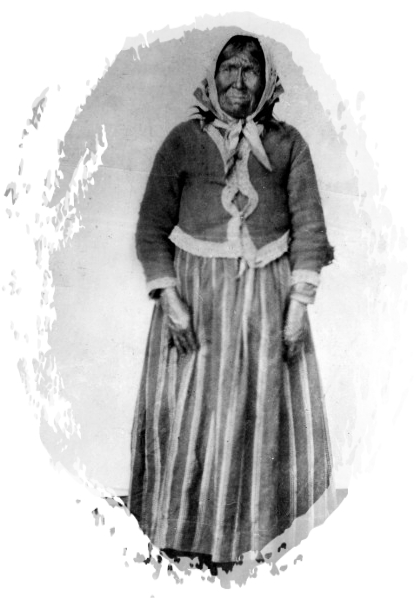
Indian Peggy ~ Local Heroine


Indian Peggy

By Claudia East

            Indian Peggy was a very colorful heroine of Yreka.  Many stories and facts have been mixed over the years so that the actual authenticity of what actually happened has been clouded.  So with the possibility of errors this story is shared.  However, with that said we say with confidence Indian Peggy saved Yreka and the former miner’s town of Humbug City from a surprise Indian attack in the early 1850s.

            When the miners came looking for gold that was their feverish purpose, and natives were oftentimes looked upon as barriers to overcome in the quest for riches.  There were often bad feelings on both sides, the miners intruded on the Indian lands and had little respect for tribal hunting grounds, and the Indians were often ill treated.  As the result the local Indian tribes were often fearful and hostile towards the “white” miners who had little regard for the environment and took and used whatever they needed to find the precious gold.  As a result of these factors groups of natives decided to try and rid their homeland of the menace and their practices and formed a large war party.  The plan was a surprise attack on Humbug City and then on to Yreka.

            Indian Peggy was an unusual and exceptional woman; she had friends on both her native side, and with the whites.  She could see that this potential raid on the miners could turn into a bloody war and both sides would lose dearly.  She would lose family and friends she had known for her whole life, as well as her white friends she had recently come to know.  It was 1852 and only a year after gold was discovered.  Indian Peggy took it upon herself to save everyone from this potential massacre.  She lived nearby on a Rancheria and walked several miles to Humbug City and warned the people there and convinced them to retreat to Yreka.  As the miners got to Yreka the news of the impending raid spread very quickly.  When the Indians came upon Humbug City and found it deserted they knew they had lost the element of surprise, they pulled back and withdrew from their plans of attack knowing they would be the targets instead.

            Indian Peggy had renewed status with the miners and the settlers because of her warning of the impending attack.  There are stories told for years that after her warning Indian Peggy would come to town and help herself to things she needed, or would knock on a door and ask for things like blankets, warm clothing or food ~ apparently she was seldom refused.  Indian Peggy lived to be at least 100 and died in 1902.  Following her death, it is said that the high school at Yreka even closed so students could attend her funeral.  It has been reported that Tyee Jim, Chief of the Shasta Nation, gave the eulogy all in his native language.  It is said that there were a good number of people, both Indian and white in attendance on that day.

            In 1951 the Siskiyou County Historical Society placed a marker at her grave.  It reads:  “Indian Peggy born about 1800.  Died October 26, 1902.  Beloved member of the Shasta Tribe.  A friend of Indians and Whites.  Saved Yreka by warning them of an Indian Attack.”  Her marker sits near the current Siskiyou Golden Fairgrounds.

*Note:  There are several stories and accounts of Indian Peggy in local publications. These are but a few:  The Siskiyou Pioneer publications from the Siskiyou County Historical Society have information about Indian Peggy in the 1971, 1951, and 2001 issues.  There is also a story about Indian Peggy at the California State Parks website.  The Siskiyou Daily News ran a story on Indian Peggy between 1998 – 2000 by Nancy Drennon.